
Should I Eat Before Exercising? What the Research Says for Women
The idea that exercising on an empty stomach forces your body to burn fat for fuel has become widely accepted in fitness circles — and for some people, in certain contexts, there is research to support it.
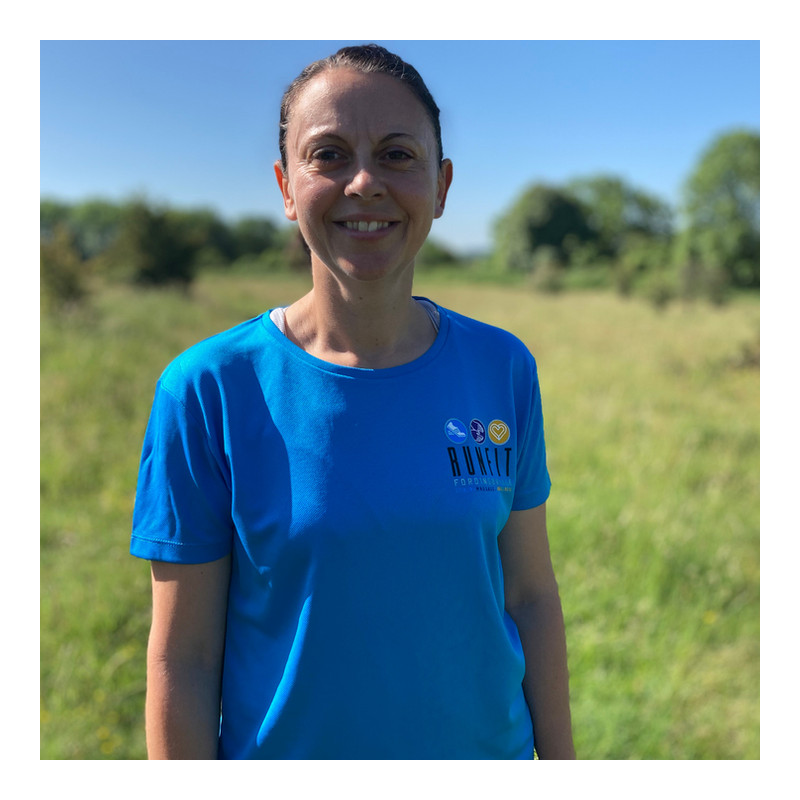
Now, as the Run Fit Fordingbridge studio in Breamore has a predominantly female clientele, this comes up from time to time. Some women find it difficult to eat before exercising, or feel that training without food will help them burn more body fat and change their body composition. It is a completely understandable position — the logic feels intuitive and the messaging around it is everywhere. But the evidence, particularly the female-specific research, tells a different story.

Where did the idea of fasted training come from?
The premise of fasted training is straightforward. When you have not eaten for several hours, your glycogen stores — the carbohydrate energy stored in your muscles and liver — are relatively low. The theory is that training in this state forces the body to draw on fat stores for fuel instead, accelerating fat loss over time.
There is some research to support this in specific contexts. Studies have shown that low-intensity, steady-state cardio performed in a fasted state can increase fat oxidation during the session itself. For certain athletes, training with low carbohydrate availability is also used deliberately as a strategy to drive specific metabolic adaptations.
But — and this is a significant but — increased fat oxidation during a session does not automatically translate into greater fat loss over time. A systematic review by Schoenfeld and Aragon, published in the Journal of the International Society of Sports Nutrition, found no significant difference in fat loss between fasted and fed exercise when total calorie intake was controlled — directly challenging the premise that fasted training produces superior results. And here is what rarely gets said: most of that research was carried out on men. When you factor in women's physiology specifically, the hormonal consequences of training fasted introduce a set of problems that the original research simply did not account for — and the picture looks very different.
What happens in women's bodies when they train fasted
The key issue is cortisol.
Cortisol is the body's primary stress hormone. It rises in response to physical exertion, to low blood sugar, and to perceived threat. When you exercise in a fasted state, both of these triggers are present simultaneously — your blood sugar is low and your body is under physical demand. The result is a significant cortisol spike.
In men, this cortisol response is relatively well-tolerated. Their hormonal systems are built around a simple 24-hour cycle, and cortisol returns to baseline reasonably quickly after exercise.
Research by Hackney and colleagues has shown that oestrogen directly influences the cortisol response to exercise, making women's hormonal systems considerably more reactive to training stress than men's — particularly during the luteal phase of the menstrual cycle. Dr Stacy Sims, exercise physiologist and leading researcher in female-specific training, has built on this foundation: women's hormonal systems are far more sensitive to cortisol dysregulation, and the consequences go well beyond the training session itself. Chronically elevated cortisol disrupts oestrogen and progesterone balance, interferes with thyroid function, impairs sleep, suppresses immune function, and — crucially — signals the body to hold on to fat stores rather than release them. Particularly around the abdomen.
The cruel irony of fasted training for women seeking fat loss is that it can actively work against that goal. Rather than accelerating fat burning, the chronic cortisol response triggered by repeated fasted training sessions can make the body more resistant to releasing body fat, not less.
Dr Sims is unequivocal on this point: women perform best in a fuelled state. This is not a general wellness recommendation. It is a specific, evidence-based position grounded in female physiology.
The low energy availability problem
There is a second issue that sits alongside the cortisol response, and it is one that is particularly relevant for active women.
Low energy availability — LEA — occurs when the body does not have sufficient fuel to support both the demands of exercise and normal physiological function. The International Olympic Committee's consensus statement on Relative Energy Deficiency in Sport — known as RED-S — identifies low energy availability as having wide-ranging consequences for women's health, including disruption to bone density, hormonal function, immunity, and cardiovascular health. Research suggests that around 55 percent of women who train regularly are in a state of low energy availability, often without realising it.
Training fasted contributes directly to this. When you arrive at a session without adequate fuel, your body is already operating with a deficit before the session begins. Over time, repeated training in this state can suppress the hormones that regulate bone density, reproductive health, and metabolic function. The consequences include increased injury risk, persistent fatigue, poor recovery, and a decline in performance.
For women who are perimenopausal or postmenopausal, where bone density and hormonal balance are already under pressure, the risks associated with low energy availability are particularly significant.
Why this matters especially for strength work and high Intensity training
Strength training requires your muscles to produce force repeatedly under load. That process is fuelled primarily by glycogen — the carbohydrate stored in your muscles. Research by Leveritt and Abernethy demonstrated that carbohydrate restriction reduces performance in strength exercise, particularly the kind of compound movements that form the foundation of most training sessions, and arriving at a strength session fasted means those glycogen stores are depleted before you even begin. You cannot produce the effort levels required to drive the adaptations that make strength training effective. You are going through the motions of a strength session without the physiological stimulus that makes it worthwhile.
The same is true for high intensity training. HIIT and SIIT both require you to reach and sustain genuinely high effort levels. That is only possible when your body has the fuel to support it. Arriving under-fuelled not only limits performance — it amplifies the cortisol response that we already know is counterproductive for women, compounding the hormonal disruption rather than managing it.
What should you eat before training?
The good news is that pre-training nutrition does not have to be complicated or involve a full meal. The goal is to arrive at your session with enough fuel to perform well and to keep the cortisol response within a manageable range.
As a general guide, a small mixed snack containing carbohydrate and some protein around 60 to 90 minutes before training is sufficient for most women. This does not need to be large — the aim is to top up glycogen stores and stabilise blood sugar rather than to eat a full meal. Good options include a banana with a small amount of nut butter, a small bowl of porridge with berries, Greek yoghurt with fruit, or a slice of wholegrain toast with eggs.
If you train early in the morning and a full snack feels too much, even something small — a banana, a few oatcakes, a small smoothie — is significantly better than nothing. Your body will respond differently, your effort levels will be higher, and your recovery will be better.
The timing matters too. Eating immediately before training can cause discomfort for some women, so finding the window that works for your digestion and your schedule is worth experimenting with. But the direction of travel is clear: fuelled training produces better outcomes for women than fasted training, and the research is not ambiguous on this.
The bigger picture
Fasted training is one of a number of practices that have been adopted by women from a body of research that was not designed with women in mind. The fitness industry has been slow to catch up with the female-specific evidence that researchers like Dr Stacy Sims have been building for years, and many of the assumptions that still circulate — about fat burning, about training intensity, about what women's bodies need — are based on studies conducted predominantly on male subjects.
Understanding your own physiology is one of the most powerful things you can do for your training. Not because it means following a rigid set of rules, but because it allows you to make informed choices that actually support your goals rather than undermine them.
If you have been skipping food before training and wondering why your energy is low, your recovery is slow, or the results are not coming — this may well be part of the picture.
About the Author
I'm the founder of Run Fit Fordingbridge, a boutique fitness studio based in Breamore serving women across Breamore, Fordingbridge and the wider New Forest area. I'm a qualified nurse, personal trainer, sports massage therapist, and England Athletics Endurance Event Coach. I coach women of all ages and abilities — from complete beginners to experienced runners training for ultras — and I run ultra marathon distances myself, including the Jordan Ultra Challenge in Wadi Rum. Everything I do at the studio is rooted in the belief that women deserve training built on real evidence, and delivered with genuine care.
References
Sims, S.T. (2022) Roar: How to Match Your Food and Fitness to Your Unique Female Physiology for Optimum Performance, Great Health and a Strong Body for Life. Revised edition. Rodale Press.
Sims, S.T. & Huberman, A. (2024) Dr Stacy Sims: Female-Specific Exercise & Nutrition for Health, Performance & Longevity. Huberman Lab Podcast, 22 July. Available at: https://www.hubermanlab.com
Schoenfeld, B.J. & Aragon, A.A. (2014) Body composition changes associated with fasted versus non-fasted aerobic exercise. Journal of the International Society of Sports Nutrition, 11(54). Available at: https://link.springer.com/article/10.1186/s12970-014-0054-7
Hackney, A.C. & Walz, E.A. (2013) Hormonal adaptation and the stress of exercise training: the role of glucocorticoids. Trends in Sport Sciences, 1(20), pp. 165-171. Available at: https://www.ncbi.nlm.nih.gov/pmc/articles/PMC5988244/
Mountjoy, M., Sundgot-Borgen, J., Burke, L. et al. (2018) IOC consensus statement on relative energy deficiency in sport (RED-S): 2018 update. British Journal of Sports Medicine, 52(11), pp. 687-697. Available at: https://pubmed.ncbi.nlm.nih.gov/29773536/
Leveritt, M. & Abernethy, P.J. (1999) Effects of carbohydrate restriction on strength performance. Journal of Strength and Conditioning Research, 13(1), pp. 52-57. Available at: https://journals.lww.com/nsca-jscr/abstract/1999/02000/effects_of_carbohydrate_restriction_on_strength.10.aspx
Loucks, A.B., Kiens, B. & Wright, H.H. (2011) Energy availability in athletes. Journal of Sports Sciences, 29(S1), pp. S7-S15.
Vieira, A.F., Costa, R.R., Macedo, R.C.O., Coconcelli, L. & Kruel, L.F.M. (2016) Effects of aerobic exercise performed in fasted v. fed state on fat and carbohydrate metabolism in adults: a systematic review and meta-analysis. British Journal of Nutrition, 116(7), pp. 1153-1164.
NHS (2024) Menopause. Available at: https://www.nhs.uk/conditions/menopause/


Thanks for the advice. eating pre training now makes perfect sense. I have listened to Dr Stacy Simms podcasts and they are good listening.
Very useful information.
Interesting article and informative!