
Cortisol: what do we need to know?

Cortisol has become one of those topics that everyone seems to be talking about at the moment. I get asked about it fairly frequently whether that's in the studio, or when I'm meeting new clients. So much of it seems to have been driven by social media, so I found myself delving into the research to find out more about cortisol and how practically we can apply that knowledge to our everyday lives.
So let's start with the basics.
What is cortisol?
Cortisol is a hormone your body produces via something called the hypothalamic-pituitary-adrenal axis, or HPA axis for short. Put simply, when your brain perceives a stressor, whether that's physical (a hard workout, an illness) or psychological (a work deadline, an argument), it sends a signal down this pathway to your adrenal glands, which then release cortisol into your bloodstream.
We've all heard of the fight or flight response, which is driven primarily by the hormone adrenaline. Adrenaline is released within seconds by the sympathetic nervous system, and it's our "get going" hormone. Cortisol comes in slightly after via the slow HPA axis pathway and its role is to sustain that "get going" response over minutes, hours, or even longer (El Camino Health, 2026).
Cortisol also plays an important role in regulating blood sugar, alertness, inflammation and metabolism in the body. It follows a natural daily rhythm, rising shortly after you wake up and gradually falling throughout the day. We all need cortisol, it's essential for life. The issue is when cortisol stays too high for too long, without the natural rise and fall it's supposed to follow.
What's the link between cortisol and stress?
So we hear cortisol and stress in the same sentence frequently, but what's the link between the two things?
To answer that question, we first need to look at what stress actually is. The NHS's Every Mind Matters service defines stress simply as the body's reaction to feeling threatened or under pressure (NHS, 2026). When we're stressed, our body releases hormones, including adrenaline and cortisol.
Now, a little stress can be useful. It's what helps us get things done, meet a deadline, react to an emergency, or focus on something that matters. Short-term stress is protective, and it's what makes us more resilient over time.
Where it becomes a problem is when stress becomes chronic. Chronic stress is generally understood as stress that persists over weeks, months or even longer, rather than resolving once the immediate trigger has passed. It's this lack of recovery time, the body never quite returning to baseline, that sets it apart from short-term, acute stress. Chronic, unrelieved stress from things like poor sleep, a demanding job, family life and caring responsibilities, or continuously not fueling enough before working out and training (yes really), and not taking proper recovery time (yes really), is what dis-regulates cortisol over time.
The NHS is clear that experiencing long-term (chronic) or severe stress can lead to physical, mental and emotional exhaustion, often described as burnout, something that lots of people will experience (NHS, 2026). This kind of long-term stress is also linked to a much wider range of health concerns, including cardiovascular disease, metabolic syndrome and diabetes.
The connection to menopause
As oestrogen and progesterone decline through perimenopause, the adrenal glands take on more of the workload for oestrogen production, competing directly with their other job of producing cortisol (The Menopause Charity, 2023). At the same time, oestrogen itself plays a role in dampening the body's cortisol response to stress. In other words, oestrogen appears to act as something of a buffer against stress, and as it declines, that buffer becomes less effective.
One of the most detailed studies in the area of cortisol and menopause - the Seattle Midlife Women's Health Study, tracked cortisol levels in women through menopause. They found that overnight cortisol rose measurably during menopause, compared with women who were still in their reproductive years and not yet in menopause (Woods, Mitchell and Smith-DiJulio, 2009).
Menopause doesn't just have an impact on stress and cortisol, it has an impact on mental health more broadly. UK-based research from NHS clinicians, published in BJPsych Open, confirmed that peri- and post-menopausal women report higher incidences of both depression and anxiety, and highlighted that without proper recognition and support, this can have long-lasting effects on quality of life (Thatcher et al., 2024). So if you've felt like stress hits you differently in your forties and fifties than it used to, then this could be why.
Cortisol and exercise
This is where a lot of the current cortisol chatter online gets things wrong, and it's something I come up against regularly with clients. "Don't do HIIT, it raises cortisol." "Cardio is bad for menopausal women because of cortisol." You've probably seen versions of this yourself.
Keep in mind that exercise raises cortisol, because all exercise is a form of physiological stress, and that's exactly what it's supposed to do, it's part of how your body adapts and gets stronger.
Long, moderate-intensity, steady-state cardio, (think longer runs, longer bike rides, sustained VO2 max style training) keeps cortisol elevated for longer during the session, and can raise your baseline cortisol over time. But this isn't a bad thing in itself. It's simply the physiological cost of that particular style of training, and it's entirely legitimate and valuable when it's serving a genuine purpose.
Lots of athletes train like this. Olympic 1500m medalist Georgia Hunter Bell runs around 30 miles a week but cycles closer to 100, and it's not just steady, easy miles: her week includes one long ride, recovery rides, and genuinely hard interval sessions and races on the bike, purposefully building both her aerobic engine and the sharp finishing speed she needs on the track (Cycling Weekly, 2025). That's not exercise for exercise's sake, it's targeted, intentional training with a clear physiological goal.
True high-intensity training (HIIT) works differently. It spikes cortisol sharply, but briefly, and with consistent training, this type of work actually lowers baseline cortisol over time, because the body adapts and becomes more stress-resilient as a result.
The real issue isn't cardio versus HIIT. It's what exercise physiologist Dr Stacy Sims describes as the "grey zone", sessions that are neither clearly low intensity nor genuinely high intensity, which give you the cortisol cost without a clear adaptive payoff either way (Sims, 2024). I've written more about the specific differences between HIIT and strength training, and what makes something genuinely HIIT, in this blog post, if you want to go deeper into that.
So the question worth asking isn't "should I avoid cardio" or "should I only do HIIT". It's "what is this session actually for". Purposeful endurance work, purposeful high intensity, and purposeful recovery all have a place. It's the accidental middle ground that serves you least.
What's the relationship between what and when we eat and cortisol?
Lots of women still skip breakfast and/or head straight into a workout on an empty stomach, without realising the knock-on effect this can have. In women, cortisol is naturally highest first thing in the morning, and it's part of our daily rhythm. Now cortisol and blood sugar are also closely linked, as blood sugar swings can themselves trigger a cortisol response, as your body works to bring things back into balance during a tough training session. Training on an empty stomach, particularly early in the day, adds to that natural morning cortisol peak rather than easing it. Add caffeine into that same fasted, early-morning mix, and the effect can compound further. Dr Stacy Sims's research points to women becoming more sensitive to this combination through perimenopause, as declining oestrogen changes how caffeine is metabolised, which can affect blood sugar stability more noticeably than it once did (Sims, 2026).
None of this means breakfast has to be a big production, or that your morning coffee is off limits. It's also worth being mindful of choosing wholegrain carbohydrates over fast-releasing sugars, since these cause much sharper blood sugar swings, and, as we've covered, that has a knock-on effect on cortisol too. It simply means that what and when you eat around training matters, not just whether you train. I've written about this in more depth in my nutrition series, so if you want the detail on carbohydrates and blood sugar stability, or on protein and how much you actually need, those posts go into that properly: Nutrition Part 2, carbohydrates and Nutrition Part 3, protein.
How to manage stress to impact on cortisol levels
A systematic review and meta-analysis of 58 studies, published in Psychoneuroendocrinology by researchers at the University of Leeds, found that stress management interventions overall did have a measurable, positive effect on cortisol levels (Rogerson et al., 2024). Mindfulness and meditation-based approaches, and relaxation-based approaches, had the strongest, most consistent effects, more so than broader "mind-body therapies" as a category.
Things like Yoga Nidra and sound baths can be especially beneficial here. PureStretch and mat-based Pilates also have a role, because they incorporate breathwork, slow controlled movement and present-moment focus, in a way that overlaps meaningfully with this research too.
Massage often gets talked about as one of these cortisol management approaches too, so it's worth asking directly: can massage specifically reduce cortisol levels? The honest answer is not directly. A comprehensive meta-analysis of 19 controlled studies, published in the Journal of Bodywork and Movement Therapies, found that massage's effect on cortisol was generally very small, and in most cases, not statistically distinguishable from zero (Moyer et al., 2011). BUT what research does consistently show is that even a single massage measurably helps with anxiety (Moyer, Rounds and Hannum, 2004). For women navigating midlife, sleep-linked anxiety, or the wider changes of menopause, this is really important. If massage can help ease anxiety, it can ultimately help with stress levels too, even if it isn't working directly through the cortisol pathway most people assume.
So how do we apply this practically?
If you're concerned about cortisol, there are things that you can do.
It starts with being purposeful about the exercise you do, asking yourself what a session is actually for, purposeful endurance work, genuine high intensity, or proper recovery, rather than drifting into that accidental grey zone in between that gives you the cortisol cost without the payoff. It also means paying attention to how you fuel around training. It's not skipping breakfast before a workout and it's being wary of reaching for caffeine on an empty stomach before a workout. Choosing wholegrain carbohydrates over fast-releasing sugars, and keeping half an eye on your overall sugar intake, both help keep your blood sugar, and in turn your cortisol, more stable.
We all know the value of looking after our physical health, but what this shows is that our mental health, is very much part of that same picture too, and arguably, should be given equal weight. In fact, I'd go further: mental health genuinely impacts how we feel about being active in the first place, so if anything, it deserves to be prioritised. It's building in regular quiet moments too, whether that's a relaxation massage in a calm space, Yoga Nidra, or a sound bath or something else that relaxes you.
But there are times when stress and anxiety go beyond what any of these self-directed approaches can help with alone, and that might be a sign that it's time to talk to someone who is qualified to help. If you find yourself struggling with stress and managing how it's impacting your life, whether you're in menopause or not, do speak to your GP. You can also self-refer for NHS Talking Therapies Hampshire, iTalk without needing to see a GP first. Mind also has excellent, practical information and support on managing stress, and never underestimate the value of talking to a trusted friend, family member, or your wider community.
About the author
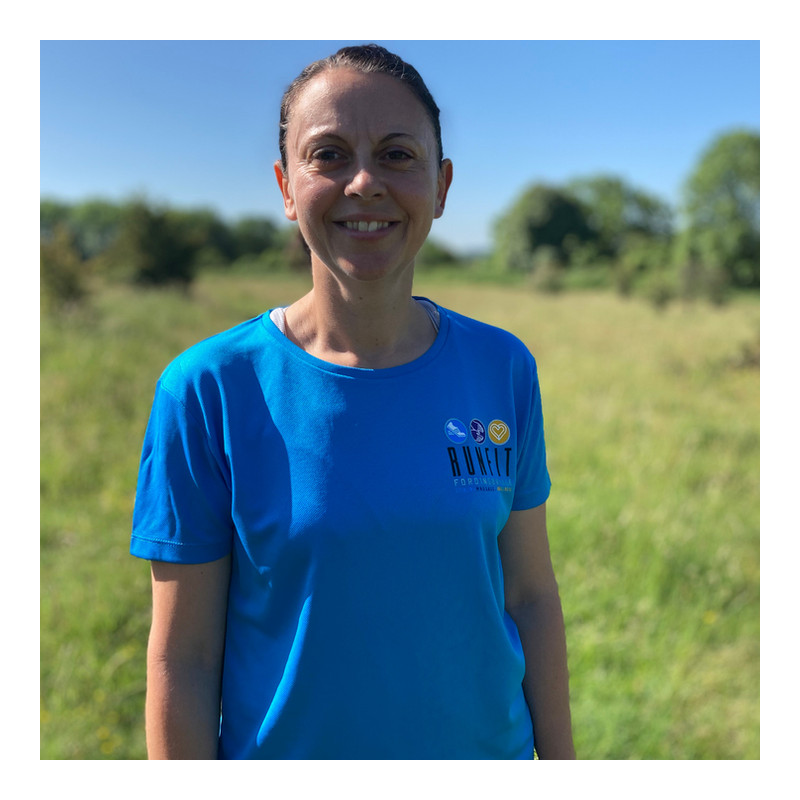
I'm Sue Jewell, founder of Run Fit Fordingbridge, a small group women's fitness studio based in Breamore, near Fordingbridge. Alongside small group training, I provide sports massage and endurance run coaching, and our newest addition, Sanctuary, a dedicated women's therapeutic massage space.
My background is as a qualified nurse since 1995, and that clinical grounding still shapes how I approach fitness and wellness today in that I'm a lover of research and evidence in everything I do. I'm also a qualified personal trainer, an England Athletics endurance event group run coach, a Level 4 sports massage therapist with additional massage qualifications, and I hold a Vegan and Vegetarian Nutrition Diploma.
On a personal level, I came to fitness late, starting in my forties. I'm now 52, a plant-based ultra marathon runner, and I bring my own lived experience of training and midlife change into everything I write, everything I teach, and how I work with clients.
References
Cycling Weekly (2025) 'It will be a part of my plan forever' -- How cycling 100 miles a week is helping this Olympic runner win medals. Available at: https://www.cyclingweekly.com/fitness/it-will-be-a-part-of-my-plan-forever-how-cycling-100-miles-a-week-is-helping-this-olympic-runner-win-medals (Accessed: 21 August 2026).
El Camino Health (2026) Cortisol -- More Than Just "the Stress Hormone". Available at: https://www.elcaminohealth.org/stay-healthy/blog/cortisol (Accessed: 21 August 2026).
Mind (2026) Stress. Available at: https://www.mind.org.uk/information-support/types-of-mental-health-problems/stress/ (Accessed: 21 August 2026).
Moyer, C.A., Rounds, J. and Hannum, J.W. (2004) 'A meta-analysis of massage therapy research', Psychological Bulletin, 130(1), pp. 3--18. Available at: https://doi.org/10.1037/0033-2909.130.1.3
Moyer, C.A., Seefeldt, L., Mann, E.S. and Jackley, L.M. (2011) 'Does massage therapy reduce cortisol? A comprehensive quantitative review', Journal of Bodywork and Movement Therapies, 15(1), pp. 3--14. Available at: https://doi.org/10.1016/j.jbmt.2010.06.001
NHS (2026) Dealing with stress. Every Mind Matters. Available at: https://www.nhs.uk/every-mind-matters/mental-health-issues/stress/ (Accessed: 21 August 2026).
NHS Talking Therapies Hampshire (iTalk) (2026) Self-refer. Available at: https://www.italk.org.uk/self-refer/ (Accessed: 21 August 2026).
Rogerson, O., Wilding, S., Prudenzi, A. and O'Connor, D.B. (2024) 'Effectiveness of stress management interventions to change cortisol levels: a systematic review and meta-analysis', Psychoneuroendocrinology, 159, 106415. Available at: https://doi.org/10.1016/j.psyneuen.2023.106415
Sims, S.T. (2024) Midlife Women Can and Should Do High Intensity Exercise. Dr Stacy Sims Newsletter, 14 October. Available at: https://www.drstacysims.com/newsletters/articles/posts/Midlife_Women_Can_and_Should_Do_High_Intensity_Exercise (Accessed: 21 August 2026).
Sims, S.T. (2026) Coffee, Decoded: What the Research Actually Says About Caffeine and Women. Dr Stacy Sims Newsletter, 8 July. Available at: https://www.drstacysims.com/newsletters/articles/posts/caffeine-women-hormones-research (Accessed: 21 August 2026).
The Menopause Charity (2023) Menopause and stress. Available at: https://themenopausecharity.org/information-and-support/symptoms/menopause-and-stress/ (Accessed: 21 August 2026).
Thatcher, A., Graham, C., Denton, G., Kearly-Shiers, K. and Manley, K. (2024) 'Mind Over Menopause: Bridging the Gap in Mental Health Care', BJPsych Open, 10(S1), pp. S188--S189. Available at: https://doi.org/10.1192/bjo.2024.475
Woods, N.F., Mitchell, E.S. and Smith-DiJulio, K. (2009) 'Cortisol Levels during the Menopausal Transition and Early Postmenopause: Observations from the Seattle Midlife Women's Health Study', Menopause, 16(4), pp. 708--718. Available at: https://doi.org/10.1097/gme.0b013e318198d6b2


Very interesting read, I have read both Dr Sims books and find the whole topic fascinating around sports and sports nutrition. I struggle with the cortisol topic whilst training for an Ironman and was blaming this for why I can't lose weight at 49yrs old. I just need to fine tune my nutrition. Great read! 😀