
HIIT and strength training: what's the difference and why does it matter?
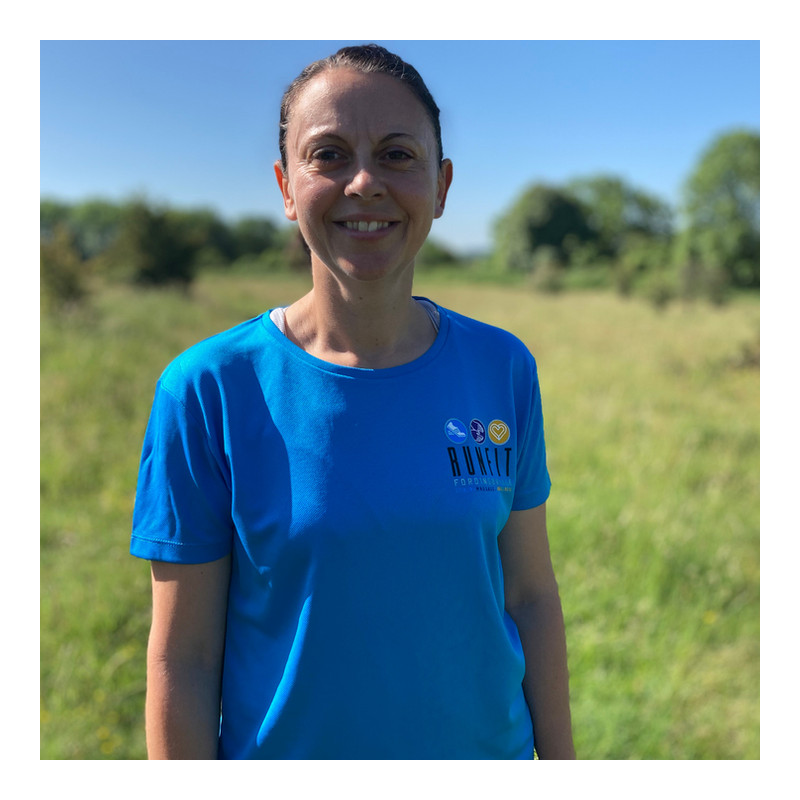
I love it when clients ask me questions about training and the differences between classes. Because here's the thing: I don't just want the clients who train at Run Fit Fordingbridge to enjoy the sessions they come to. I want them to understand what each session is actually doing for them. What goals it will help them work towards, what's happening in their body during those sessions, and why the sessions are structured the way they are. That knowledge empowers them to make good choices.
So this week's great question was — in fact two questions. And interestingly, they came from more than one person.
What happens in a HIIT class? And how is it different from a weights class?
Those are both great questions, and ones I suspect more people have wondered than have actually asked. So this post is going to answer them properly. We'll cover what HIIT actually is, why the structure of a HIIT session matters enormously — especially for women — and how that all relates to the two interval training classes at Run Fit Fordingbridge: HIIT and HIIT Adapt.
So what is a HIIT class?
HIIT stands for High Intensity Interval Training. At its simplest, it's a session structured around alternating short periods of hard effort and recovery. You work hard, you rest, you go again. That's the basic idea.
But before we get into the how, it's worth asking the why. What is HIIT actually for? The goal of a HIIT session is cardiovascular adaptation — improving the efficiency of your heart and lungs, training your body to work hard and recover quickly, and supporting your metabolic health.
Done well, HIIT improves cardiovascular health, even in postmenopausal women. It preserves lean muscle mass and metabolic flexibility during menopause — both of which become harder to maintain as oestrogen levels decline. It helps improve body composition and fat-burning potential, supports hormonal balance and a healthy stress response, and is more effective than moderate-intensity steady-state cardio for driving real adaptation in the body. It is also time-efficient, which matters when you're fitting training around a full life.
What a HIIT session looks like in practice can vary enormously. The exercises might be cardiovascular — think fast-paced movements that get your heart rate up quickly. They might involve weights, bodyweight exercises, or a combination of both. What makes something genuinely HIIT isn't the exercises themselves, it's the structure: defined work intervals, defined rest intervals, and an effort level during the work periods that is genuinely high.
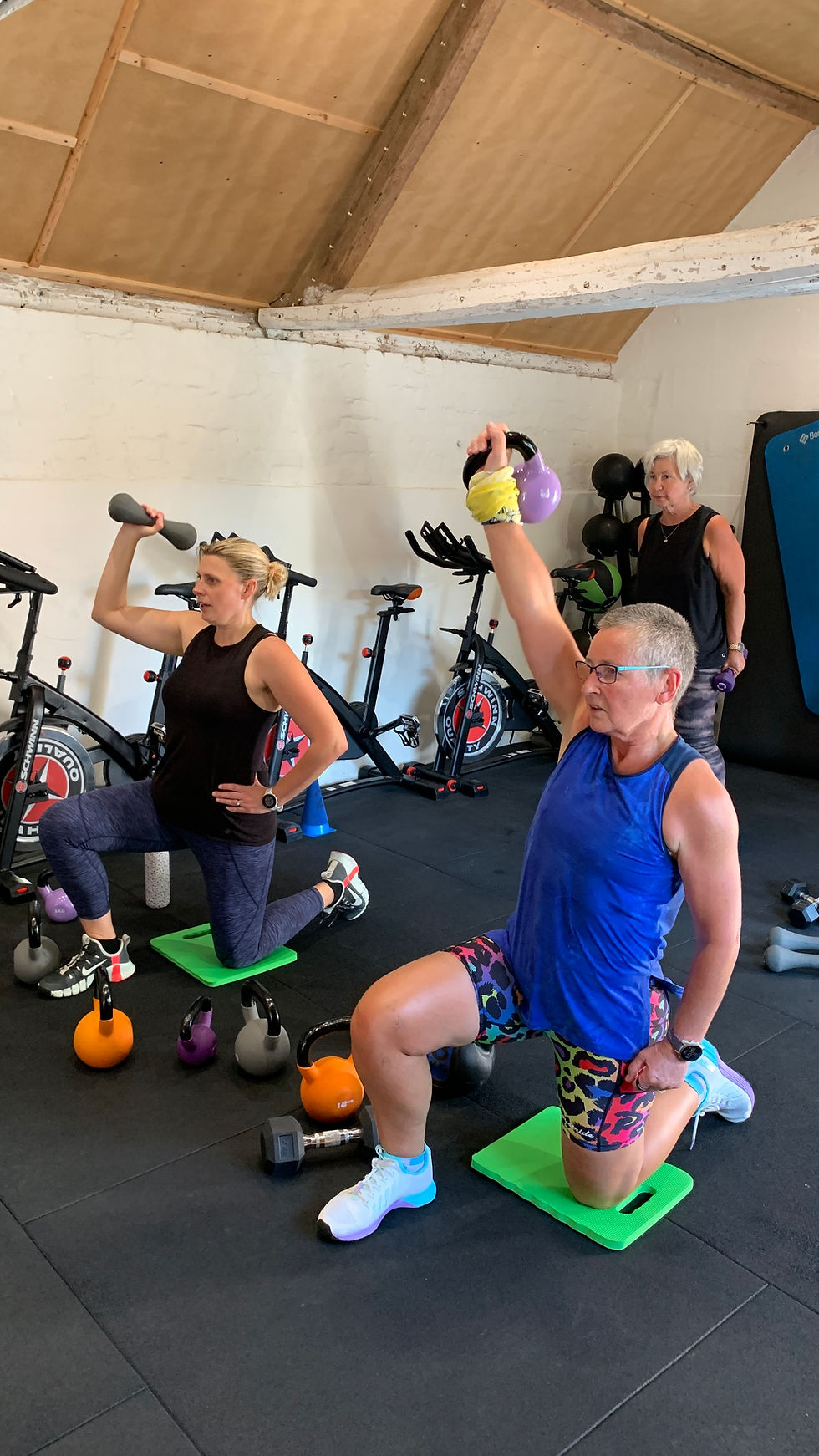
This is where HIIT differs from a strength or weights class. In a strength session — like Sweat and Condition at Run Fit Fordingbridge — the focus is on slower, more controlled movements using resistance. The goal is to challenge your muscles directly: to build strength, improve muscle tone, support bone density, and improve your functional fitness. The pace is deliberate. We use repetition numbers for exercises and the rest between sets allows your muscles to recover enough to perform the next set well.
HIIT is a different stimulus entirely. The two are complementary, not interchangeable — and both have an important place in a well-rounded training week.
What HIIT can do for women specifically — with the right ratios
This is where it gets interesting. When HIIT is structured based on the research into female physiology, it can be a genuinely powerful tool for women's health — at every life stage. The research of Dr Stacy Sims, exercise physiologist and one of the world's leading experts in female-specific training, is clear on this. When HIIT sessions are designed around how women's bodies actually work — rather than a generic template built around male physiology — the benefits are significant and well-evidenced.
For women navigating perimenopause and menopause in particular, well-structured HIIT isn't something to shy away from — it's one of the most valuable training tools available. The key word, though, is well-structured.
Why structure matters
Walk into many group fitness sessions labelled as HIIT and you'll find 30 to 45 seconds of effort followed by 10 to 15 seconds to transition to the next exercise, repeated for the full hour. It feels intense. You finish exhausted and sweating. Surely that's a sign it's working? Not necessarily. And the reason comes down to what's actually happening inside your body.
The continuous high-effort, minimal-recovery format that dominates many HIIT classes was largely developed around male physiology. For women, this format drives up cortisol — your primary stress hormone — and keeps it elevated throughout the session and beyond. Chronically elevated cortisol interferes with fat metabolism, disrupts hormonal balance, impairs sleep, and undermines recovery. For women in perimenopause and menopause, this effect is even more pronounced.
The problem isn't the intensity. It's the absence of proper recovery between efforts.
True HIIT, based on Dr Sims' research, uses true recovery time and more of it. You work hard — genuinely hard — and then you recover fully before going again. That recovery isn't wasted time. It is the point. It's what allows the next effort to be a quality effort, and it's the contrast between hard work and full recovery that drives the adaptation your body is looking for. Without it, you're simply accumulating fatigue.
This is the principle that underpins both HIIT classes at Run Fit Fordingbridge — but expressed in two distinct ways.
HIIT at Run Fit Fordingbridge
At Run Fit Fordingbridge we do both HIIT and SIIT.
The Monday evening HIIT class at the studio follows Sprint Interval Training principles — sometimes referred to as SIIT. This is intensity taken to its absolute maximum.
SIIT uses very short work intervals of 30 seconds or less at a supramaximal effort — meaning everything you have. Not hard. Not challenging. Everything. The kind of effort where you genuinely could not sustain it beyond that 30 seconds. Because the effort is so complete, the recovery periods are longer — typically two minutes — so that your body can fully restore itself and reproduce that maximum effort again. If you can't match your first sprint on your fifth, the recovery wasn't long enough.
The class combines this sprint interval approach with bodyweight and weighted exercises, and it is higher impact in nature. It's a demanding session — one that builds power, improves aerobic fitness, increases lean mass, and delivers a genuinely powerful training stimulus. It's also time-efficient. The total volume of hard work within the session is relatively small, but because the effort during those intervals is absolute, the physiological response is significant.
It's worth saying clearly: this class is not for absolute beginners nor if you are managing an injury. HIIT Adapt would be the place to start.

HIIT Adapt at Run Fit Fordingbridge
HIIT Adapt is built on true HIIT principles — sustained hard effort (not maximum) at 80 to 95 percent of your maximum, with equal recovery periods. The format follows a 1:1 work to rest ratio and we work for longer periods. The recovery intervals are real recovery. And because the effort during the work periods is genuine, the benefits are genuine too.
The class uses the studio bikes, which is a deliberate choice. Cycling is low impact, which means there is no stress on your joints from jumping or landing. It allows you to work at a genuinely high cardiovascular intensity safely and with good form, regardless of your fitness level or any injury considerations. The bikes also make it straightforward to regulate your effort and your recovery in a way that floor-based exercises don't always allow for these periods of time.
HIIT Adapt is designed specifically for women who want a lower impact option that still delivers real results, for those navigating perimenopause or menopause, and for anyone returning to fitness or managing an injury. Lower impact does not mean less effective. The cardiovascular and metabolic benefits of this format are well supported by the research, including improvements in cardiovascular health, body composition, lean muscle preservation, and metabolic flexibility during menopause.
This is also a class where your current fitness level doesn't matter. Because the effort is relative to your own perceived effort levels— your hard is your hard — it works equally well whether you're just starting out or have been training for years.

So which class is right for you?
The honest answer is that most people would benefit from both across their training week, alongside dedicated strength work.
HIIT on Monday evenings is the higher intensity, higher impact option. It's for those who have a good fitness foundation, enjoy the challenge of all-out effort, and want to build power and cardiovascular performance alongside their strength training.
HIIT Adapt on Friday mornings is the lower impact, equally well-structured option. It's the right starting point if you're newer to fitness, navigating midlife hormonal changes, managing an injury, or simply want a session that works hard for your body without the impact demands of the Monday class.
Both classes are capped at a maximum of seven people. Both are coach-led throughout. And both are designed around what the research tells us about how the body responds to training — not a generic template built for someone else.
Where strength training fits in
It's worth coming back to the original question, because HIIT and strength training are often confused or treated as alternatives when they're not.
Sweat and Condition — the strength and conditioning class at Run Fit Fordingbridge — works on building and maintaining muscle mass, improving bone density, supporting functional fitness, and improving body composition. Strength training is foundational at every life stage, and particularly important for women as oestrogen levels decline and the body becomes less efficient at maintaining muscle mass without a specific training stimulus.
HIIT and SIT training, by contrast, work on your cardiovascular system, your metabolic health, and your body's ability to perform and recover under demand. The two together create a training week that covers the full picture — strength, power, cardiovascular fitness, and recovery.
What should I be doing each week and how much of each?
This is one of the most common questions I get asked, and it's a good one. Because knowing what each session does is one thing — understanding how to piece them together into a week that actually works for your body is another.
The research is fairly consistent on this. For strength training, two to three sessions per week is the sweet spot. This frequency is enough to drive real adaptation — building and maintaining muscle mass, improving bone density, and supporting body composition — while allowing adequate recovery between sessions. More is not always better, and recovery is where the adaptation actually happens.
For HIIT and SIT, one to two sessions per week is typically sufficient. Because of the demands these sessions place on the nervous system — particularly SIT — adequate recovery between sessions is essential. Dr Stacy Sims is clear that for most women, too many high-intensity interval sessions per week can tip the balance from productive stress to accumulated stress, undermining the very adaptations you're training for. Quality over quantity applies here more than anywhere else.
What does that look like in practice? A well-structured week might include two to three strength sessions and one to two interval sessions — with at least one full rest or active recovery day built in. Active recovery doesn't mean doing nothing. A Purestretch or Pilates session supports recovery without adding to the training load, helping to maintain mobility, reduce muscle tension, and keep you moving well between the harder sessions.
The key principle is this: your body adapts during rest, not during the session itself. The training is the stimulus. The recovery is where the work gets done. Getting that balance right is what separates a training week that leaves you feeling stronger and more energised from one that leaves you feeling flat and depleted.
If you're not sure how to structure your week around your goals, your schedule, and where you are right now, get in touch at runfitfordingbridge@icloud.com and we can have a chat about it.
About the author
Sue Jewell is the founder of Run Fit Fordingbridge, a boutique women's fitness studio and run coaching business based in Breamore, near Fordingbridge in the New Forest, Hampshire. A qualified nurse by background, Sue has built her expertise across endurance run coaching, personal training, sports massage, nutrition and women's health — including a specialist qualification in supporting pre and post natal clients with exercise and nutrition. She works with women of all ages and fitness backgrounds — from those taking their very first steps into fitness, through to runners preparing for ultra marathon and multi-day events. Sue has personal experience of endurance running in some challenging environments, including Wadi Rum in Jordan and the Sahara, and was part of the sports massage team at the 2022 Commonwealth Games. She started Run Fit Fordingbridge because she wanted to create the kind of supportive, inclusive women's fitness community she wished had existed when she began her own fitness journey in her late thirties. Find out more about Sue here.
References
Sims, S.T. (2024) HIIT vs SIT Cheat Sheet. Available at: drstacysims.com
Sims, S.T. and Huberman, A. (2024) Dr Stacy Sims: Female-Specific Exercise and Nutrition for Health, Performance and Longevity. Huberman Lab Podcast, 22 July. Available at: hubermanlab.com
Mandrup, C.M., Egelund, J., Nyberg, M., Enevoldsen, L.H., Stallknecht, B.M., Kolnes, K.J., Jensen, J., Dela, F. and Hellsten, Y. (2017) Effects of high-intensity training on cardiovascular risk factors in premenopausal and postmenopausal women. American Journal of Obstetrics and Gynecology, 216(4), pp.384.e1-384.e11. Available at: doi.org/10.1016/j.ajog.2017.01.017
Grgic, J., Schoenfeld, B.J., Davies, T.B. and Lazinica, B. (2018) Effects of resistance training frequency on measures of muscle hypertrophy: a systematic review and meta-analysis. Sports Medicine, 48(5), pp.1207-1220. Available at: doi.org/10.1007/s40279-018-0901-x
NHS (2024) Menopause. Available at: nhs.uk/conditions/menopause


Thanks Sue, informative and interesting.