
Feeling stiffer than you used to be?
You've been sitting at your desk for a couple of hours, deep in emails or a spreadsheet, and you get up to make a drink, and as you stand, something in your neck or your upper back protests. Not painfully, just a tightness, a stiffness, a reminder that your body has been held in one position for too long. You roll your shoulders, move your head slowly from side to side, and gradually things loosen up. You carry on with your day and don't think much more about it.
Then it's the long drive. You arrive at your destination, open the car door, and for a moment you just have to stand there. Your hips feel locked, your lower back is grumbling. You take a few steps and slowly, slowly, your body remembers how to move properly again.
The alarm goes off the next morning. For the first ten minutes there’s that stiffness that greets you before your body has had chance to warm up and wake up, before everything loosens up and you feel like yourself.
Sound familiar?
Most women put these things down to age. And while age does play a role, there's something else going on that doesn't get talked about nearly enough, and understanding it changes everything about how you look after your body.
What's actually happening — and why oestrogen matters
As women move through their 40s and into perimenopause and menopause, oestrogen levels begin to decline. Most people know that oestrogen is connected to the menstrual cycle and reproductive health, but oestrogen also plays a direct part in collagen production.
Collagen is the protein that gives our connective tissues, tendons, ligaments and joint cartilage their strength and elasticity, and it also contributes to joint lubrication. As oestrogen declines, collagen production slows, joints become less well lubricated, and connective tissue loses some of its elasticity. The NHS confirms that perimenopause and menopause can cause aching and painful joints due to lowered levels of oestrogen. The Menopause Charity goes on to explain that joints have oestrogen receptors which are directly affected by oestrogen loss, and that the resulting joint pain can affect women's ability to exercise and stay active. The result is that creeping stiffness, the joints that feel less free, and the body that takes longer to warm up in the morning.
In a paper published on behalf of The Menopause Society it finds that joint pain and musculoskeletal complaints are among the most common reasons women seek medical care in their 40s and 50s, that is directly linked to oestrogen-deficient states.
The good news is that flexibility and mobility work done consistently directly counters many of these changes. The NHS supports this view, stating that improving your flexibility can improve your posture, reduce aches and pains, lower your risk of injury, and help you to continue carrying out everyday tasks. Exercise is a key recommendation to manage these symptoms, and for women in their 40s, 50s and 60s who want to stay active, capable and comfortable in their bodies, this is essential, not optional.
Flexibility and mobility — what's the difference?
These two words are often used interchangeably, but they're not quite the same thing and understanding the difference helps you see why both are important.
Flexibility refers to the ability of a muscle to lengthen. A flexible hamstring, for example, can extend without pulling or causing discomfort.
Mobility refers to the ability of a joint to move through its full range of motion with control. Your hip might be flexible and the muscles around it might not be particularly tight, but if the joint itself doesn't move freely and with stability, you'll still feel restricted.
Most of us, if we're honest, have been neglecting both. We stretch occasionally, usually when something hurts or as a token couple of moves after a run. We don't think about joint mobility at all until it starts to hinder us, and by then we've often already developed compensation patterns. Compensation patterns are the bodies way of finding workarounds for restricted movement that can eventually lead to pain and further issues elsewhere.
It's not just about doing exercise, it's about your everyday life
Getting up off the floor after playing with the grandchildren. Reaching to the back of a high cupboard in the kitchen. Turning your head properly to reverse the car. Lifting a heavy bag of shopping out of the boot without your back complaining. Bending down to do the gardening without your hamstrings and glutes screaming at you for the rest of the day.
These are the movements that genuinely determine your quality of life, and they are all directly affected by your flexibility and mobility. The Women's Health Concern factsheet published by the British Menopause Society highlights that regular exercise including flexibility work provides joint and muscle pain relief in menopausal women, and that the benefits extend well beyond the gym and into daily life. Research published in the International Journal of Environmental Research and Public Health found that flexibility training significantly improved posture and quality of movement in physically inactive older women in just 14 weeks. A study specifically examining postmenopausal women found that lower-body flexibility was independently associated with quality of life. This isn't just about feeling a bit less stiff, it has a measurable impact on how well you feel day to day.
When your hips move freely, getting up from the floor is easy. When your thoracic spine (the upper and mid back) has good mobility, reaching and twisting feel effortless. When your hamstrings and calves have adequate flexibility, bending and lifting don't involve bracing yourself for discomfort.
The changes that come from regular flexibility and mobility work often show up where you least expect them. Not necessarily in your fitness classes, but in your ordinary day. Getting out of the car and just walking, without that moment of waiting for your hips to catch up. Waking up and feeling ready to move straight away rather than spending the first five minutes creaking around the kitchen. Small things, but they add up to a very significant difference in how you experience daily life.
Why runners can't afford to skip this
As a women's endurance run coach, I see the same pattern repeatedly. A woman is running consistently, making progress, feeling good and then a niggle appears. The calf that won't settle. The hip flexor that tightens up every time the mileage increases. The IT band that starts to make itself known around mile eight.
Nine times out of ten, when we look at what's underneath these issues, restricted mobility and flexibility are part of the picture. Research shows that female runners are particularly susceptible to movement pattern issues driven by hip mechanics. Tight hips cause the pelvis to tilt and alter running gait, poor ankle mobility affects foot strike and loads the calf unevenly, and limited thoracic mobility means the spine can't rotate properly during running, putting strain on the lower back and hips instead.
Running is a repetitive movement. Every step reinforces whatever patterns already exist in your body whether mechanically good or bad. If there's a restriction somewhere, running thousands of steps a week will find it eventually.
This is why, as a women's run coach, flexibility and mobility work isn't something I treat as optional for the runners I work with. It's part of their training plans and not something to squeeze in occasionally. It’s a consistent, non-negotiable element of staying healthy and running well for the long term.
Adequate flexibility also supports better running economy meaning your body uses energy more efficiently when your muscles and joints are working through their full range of motion. You run better, you recover faster, and you stay out of the sports injury clinic.
Why this is built into the Run Fit Timetable
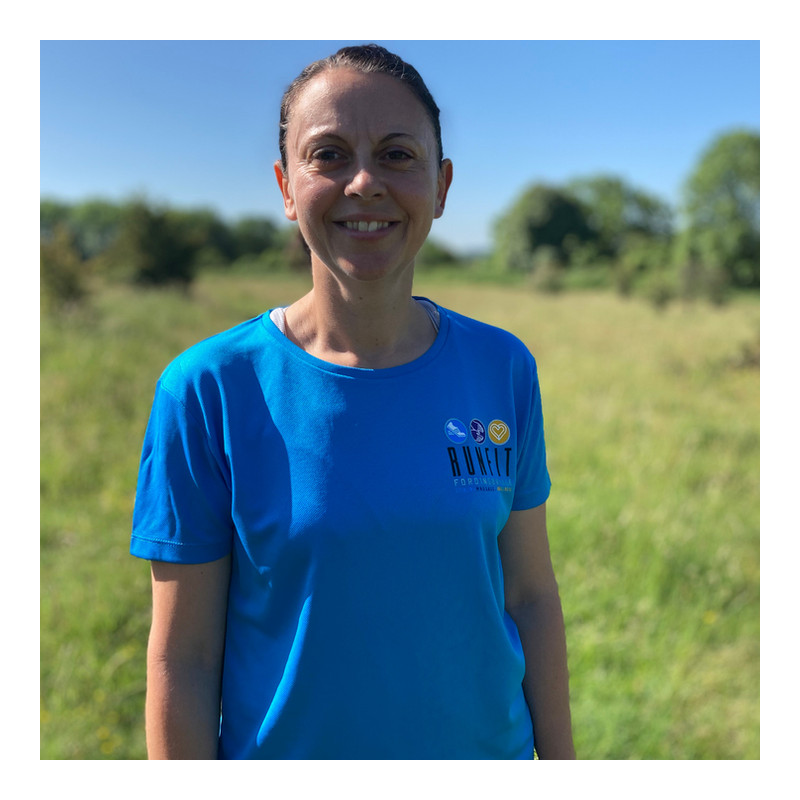
When I put together the timetable at Run Fit Fordingbridge, I was intentional about including flexibility and mobility work alongside the strength sessions and higher intensity classes. Because I understand from both a professional and personal standpoint that this is where a lot of the real, lasting progress happens.
PureStretch sits in our timetable for a reason. It's a class that brings together flexibility, mobility and core work in a way that is accessible to every woman regardless of fitness level, physical restrictions and experience. You don't need to be flexible to come, nor a runner or an athlete. You just need a body that you'd like to move more freely. Let’s face it that's all of us (me included).
As the Mayo Clinic notes, stretching is a recommended component of a well-rounded fitness routine for women going through menopause. They specify the importance to set aside time to stretch, particularly when your muscles are warm and receptive. This is exactly what PureStretch provides, in a supported, small group environment where you'll be coached through every session.
All of this is why I'd encourage every woman who trains at the studio, or is thinking about it, to consider making it a regular part of what they do every week. Not instead of the weight’s sessions but alongside them.

Where to start
If this is all new to you, you don't need to do anything drastic. Here are two simple things you can begin with straight away.
Firstly, break up your sitting. If you work at a desk or spend long periods at a computer, set a reminder to get up and move every 45 minutes to an hour. Stand up, roll your shoulders back, take your neck through its range of motion gently, and take a short walk - even just to the kitchen and back. This alone makes a meaningful difference to how your body feels by the end of the day.
Secondly, come and try PureStretch. You can book taster classes through the online booking system on the website. No experience needed, just come as you are.
The bottom line
Flexibility and mobility work isn't a luxury, and it isn't just for yogis or dancers or people who are already bendy. It is for every woman who wants to move well, feel comfortable in her body, stay active as she ages, and get more out of everything else she does — whether that's running a half marathon or getting out of the car without wincing.
The stiffness so many women accept as inevitable is, in large part, something that can be improved. Understanding the role that oestrogen plays, recognising that this is something you can actively work on, and making flexibility and mobility a consistent part of your routine can make a profound difference. Not just in your fitness, but in your everyday life.
Your body is designed to move. Let's make sure it can.

References
Da Silva Sobrinho, A.C., de Almeida, M.L., da Silva Rodrigues, G., Finzeto, L.C., Silva, V.R.R., Bernatti, R.F. & Bueno Junior, C.R. (2021) 'Effect of flexibility training associated with multicomponent training on posture and quality of movement in physically inactive older women: a randomized study', International Journal of Environmental Research and Public Health, 18(20), p. 10709. https://doi.org/10.3390/ijerph182010709
Faubion, S.S., Itani, M., Larkin, L., Kapoor, E. & Shufelt, C. (2026) 'Joint pain and menopause', Menopause, published on behalf of The Menopause Society. https://pmc.ncbi.nlm.nih.gov/articles/PMC12915535/
Mayo Clinic (2019) Women's wellness: fitness tips for menopause. Available at: https://newsnetwork.mayoclinic.org/discussion/womens-wellness-fitness-tips-for-menopause/
NHS (2024) Joint pain. Available at: https://www.nhs.uk/symptoms/joint-pain/
NHS (2022) How to improve your strength and flexibility. Available at: https://www.nhs.uk/live-well/exercise/how-to-improve-strength-flexibility/
Santos-Lozano, A., Pareja-Galeano, H., Sanchis-Gomar, F., Fiuza-Luces, C., Barreiro, E. & Lucia, A. (2016) 'Association of physical fitness with health-related quality of life in early postmenopause', Menopause, 23(5). https://www.ncbi.nlm.nih.gov/pmc/articles/PMC5010831/
The Menopause Charity (2024) Joint pain and muscles. Available at: https://themenopausecharity.org/information-and-support/symptoms/joint-pain-and-muscles/
Weltin, E., Gollhofer, A. & Mornieux, G. (2021) 'Sex-specific hip movement is correlated with pelvis and upper body rotation during running', Frontiers in Sports and Active Living. https://www.ncbi.nlm.nih.gov/pmc/articles/PMC8255915/
Women's Health Concern / British Menopause Society (2023) Exercise in menopause. Available at: https://www.womens-health-concern.org/wp-content/uploads/2023/06/29-WHC-FACTSHEET-Exercise-in-menopause-JUNE2023-A.pdf


Hi Sue. This sounds all to familiar for me so was definitely worth the read. Do you have any thoughts on whether taking collagen supplements is worth the cost or maybe ideas for increasing collagen production during / after menopause? Thank you for this very interesting blog.