
Mental Health Awareness Week 2026, 11–17 May. Taking action to support your mental health with things that genuinely help.
This week — the 11th to the 17th May — is Mental Health Awareness Week 2026.
This year's theme is action because real change happens when we take action. Action for ourselves, action for others and action for our community. The action I am going to take to help others and the community is to talk about mental health. Not just talk about it, but hopefully give you some insight into how to recognise when yours needs some attention and some practical things you can do that genuinely make a difference.
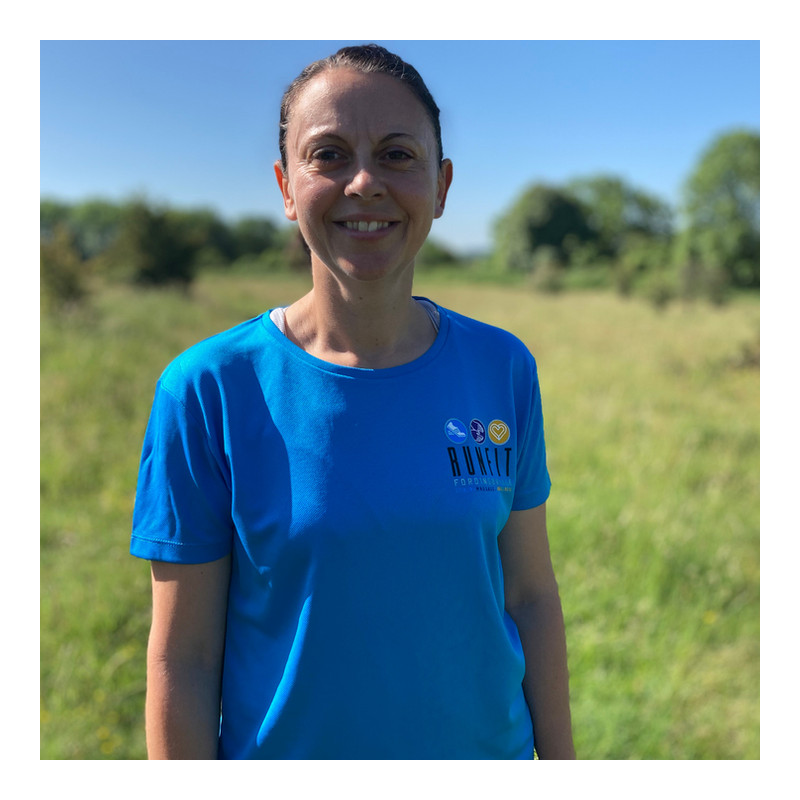
I have been a qualified nurse since 1995, and before Run Fit Fordingbridge came into being, I worked in a variety of settings both within the NHS and in the public sector. In healthcare, in business, in Occupational Health and in NHS staffing and workforce.
I have, like most of you, seen and been in environments where there has been acute stress. You know that short sharp stressful event at work or in life where things are ok one minute, then there is a short period of high pressure before it tails off and things settle down. But I have also seen and experienced the long, slow pressure cooker effect of stress — where it builds over weeks and months. The kind that creeps up and impacts even the most easy going, resilient and capable people to the point where they start to struggle. And suddenly that careful balancing act of juggling work, life and home becomes more difficult and your mental health is impacted.
The Mental Health Foundation is asking us all three things this week.
To find one thing to boost our own mental health and choose one positive action that works for us.
To think about what we can do to help build mentally healthy communities, workplaces and schools.
To remember that while individual actions matter, they are only part of the story. We all need to take action to ensure good mental health for everyone in the UK.
This post is my contribution to all three.
Mental health — we all have it
Before we get into the practical stuff, it is worth pausing on something that often gets lost in conversations about mental health. Mental health is not something some people have and others don't. We all have mental health, in the same way we all have physical health, and just like physical health, it fluctuates. There are times when it is good, times when it is fragile, and times when it needs some deliberate attention and care.
Around one in five adults in the UK has a common mental health condition such as anxiety or depression. That is a significant proportion of the people around us — colleagues, friends, family members, and very possibly ourselves at some point. There is nothing unusual or shameful about struggling. What matters is knowing what can help, and feeling able to take a step towards it or to help someone else to do that.
The six things that follow are not about fixing everything overnight. But they are based on evidence, are practical and you don't have to do all of them. As the Mental Health Foundation puts it this week: start with one thing.
1. Talk about it
One of the most powerful things you can do for your mental health is to talk about it. Talk to a professional, a friend, a family member, a colleague. Someone trusted who will listen without immediately trying to fix things or offer solutions.
The Mental Health Foundation puts it well: have a chat with someone who will listen and not fix. Being heard, really heard, has a value that is easy to underestimate. It reduces the sense of isolation that poor mental health thrives on, and it often brings perspective that is impossible to find when you are stuck inside your own head.
If things feel bigger than a conversation with a friend can hold, please do not wait. Your GP is always a good first step. They can listen, offer support and refer you to talking therapies if that would help. You do not have to be in crisis to ask for support. Going early is always better than waiting until things become overwhelming.
If you need support outside of GP hours, or would prefer to speak to someone anonymously, there are some excellent free services available which are listed at the end of this blog. Asking for help is not a sign that things have gone wrong. It is a sign that you are taking your mental health seriously. That is a brave and sensible thing to do.
2. Eat well. The food and mood connection
The relationship between what we eat and how we feel mentally is supported by a growing body of research. The gut and the brain are in constant communication via what is known as the gut-brain axis. This is a network of nerves, hormones and biochemical signals that means the state of your digestive system directly influences your mood, energy levels and mental clarity. When we eat well — think fruits, vegetables, wholegrains — that communication tends to support good mental health. When we eat poorly, especially a lot of ultra-processed foods, sugar and refined carbohydrates, it can contribute to low mood, anxiety and poor concentration.
Blood sugar stability is a particularly important piece of this. Foods that cause rapid spikes and crashes in blood sugar (think sugary snacks, processed foods, white bread) create corresponding swings in energy and mood. The crashes can feel remarkably similar to anxiety, and over time this pattern takes a toll. Eating in a way that keeps blood sugar more stable, such as including plenty of vegetables, adequate protein at each meal and whole food carbohydrates, supports a much more even emotional keel throughout the day.
This does not mean perfection or an overnight overhaul. Small, consistent changes made over time are far more sustainable than dramatic ones that don't last. If you want to understand more about how to eat well and how food affects how you feel, I have written a series of nutrition based blog posts about it which you can find via this link.
3. Get active and move your body
Exercise is probably the single most robustly evidenced lifestyle intervention for mental health that we have. The NHS recommends physical activity as a first-line approach for mild to moderate depression and anxiety. Not as a replacement for professional support when that is needed, but as a genuinely effective tool in its own right.
When we exercise, the brain releases endorphins and dopamine which are chemicals associated with mood, motivation and a sense of wellbeing. Physical activity also increases brain-derived neurotrophic factor, a protein that supports cognitive function, emotional regulation and resilience. They are measurable, meaningful changes in brain chemistry that directly influence how we feel.
Getting outside adds another layer. There is good evidence that time in nature around trees reduces anxiety, lowers perceived stress and improves mood. If you are in the Fordingbridge or Breamore area, you are surrounded by some of the most beautiful countryside in the south of England. That is not a small thing when it comes to mental health.
It is important to say that exercise does not need to be intense to be effective for mental health. What matters far more than intensity is consistency. Turning up regularly, finding something you genuinely enjoy, and making it a sustainable part of your life. Walking, a gentle stretch class, a run through the New Forest — it all counts. The best exercise for your mental health is honestly the one you will actually do and on a regular basis.
One thing that helps enormously with that consistency is commitment. Having somewhere to be, people who expect you, a time in the diary that is yours. Which leads us neatly to the next point.
4. Find your community — you don't have to do this alone
Loneliness and social isolation are among the most significant risk factors for poor mental health we know of. Research consistently shows that people with strong community connections and social support networks report fewer mental health struggles including depression, anxiety, loneliness and stress. The flip side is that isolation amplifies low mood, anxiety and the sense that everything is harder than it should be, is equally well supported.
Belonging does not require a packed social calendar or being naturally outgoing. It can simply mean having somewhere you are known and feel like you belong. Somewhere people notice if you are not there and where you can show up as you actually are rather than the version of yourself that has everything together.
Getting active and finding community don't have to be separate things. At Run Fit Fordingbridge, where our classes are small (a maximum of seven people) real bonds form. People know each other's names, celebrate each other's wins and notice when someone seems to be having a harder time than usual or are not there. That sense of being part of something, of not carrying things entirely alone, is in my view one of the most underrated aspects of what a small fitness community can offer and one of the most important for mental health.
I wrote a more in depth blog post on the science of community and wellbeing a while back which goes deeper into the evidence. But what I do know from watching it happen week in, week out, is that it is real and it matters.
5. Make space to rest and restore
Good mental health is not just about doing more — it is equally about making space to rest and recover. This isn't laziness, nor a treat, nor an indulgence. When we are running on empty, everything becomes harder: our resilience drops, our perspective narrows and small things feel much bigger than they are. Actively replenishing your reserves is not a luxury.
PureStretch, which we offer at Run Fit Fordingbridge, is a gentle but effective way to do this. Combining mobility, flexibility and light core work, it addresses the physical tension that accumulates in the body during difficult periods. Tight shoulders, a stiff neck, a clenched jaw, all places where mental and emotional strain tends to live physically. Working with that tension deliberately has a genuine effect on how you feel mentally. It is accessible to everyone regardless of fitness level, and it requires nothing from you other than showing up and allowing yourself to slow down.
At Sanctuary by Run Fit Fordingbridge, the focus is on therapeutic massage for relaxation and restoration in a quiet and private space, which offers something that movement and nutrition alone cannot. Dedicated, uninterrupted time in which you are not required to do, produce or manage anything. Research consistently shows well-established benefits of massage for anxiety, mood and perceived wellbeing. For many people the most significant thing about it is simpler than the biochemistry: it is protected time, just for you, in which the only thing asked of you is to rest.
If you are carrying a lot right now, that matters more than you might think.
6. Check in on others
Ask someone how they are and mean it. Really listen to the answer.
When someone is struggling with their mental health, they often withdraw. They go quieter. They stop showing up to things. They say they are fine when they are not, because they don't want to be a burden or don't know how to start the conversation. Sometimes all it takes is one person noticing, and asking, and staying with the answer rather than moving on.
You do not need to have the answers or know the right thing to say. You just need to ask, and to listen. That is enough. And if you are worried about someone, it is always ok to gently encourage them towards professional support or one of the services listed below. That one conversation could make more difference than you realise.
Your one action this Mental Health Awareness Week
The Mental Health Foundation's ask this week is not to overhaul your life. It is to find your one thing.
One thing for yourself. One thing for someone else. And if we all do that, together we contribute to something bigger — a community where mental health is taken seriously, where people look out for each other, and where asking for help is unremarkable because it is normal.

Support services if you need to talk
If you need urgent help, NHS 111 can support you online or by calling 111.
Samaritans are available 24 hours a day, 365 days a year. Call free on 116 123.
Shout offers free, confidential support by text, 24 hours a day. Text SHOUT to 85258.
CALM (Campaign Against Living Miserably) run a free helpline on 0800 58 58 58, open from 5pm to midnight every day, as well as a webchat service.
Mind offer a wide range of resources and support.
The Mental Health Foundation has a full list of support organisations at mentalhealth.org.uk/get-help — it is a really useful page to bookmark.
References
Dash, S.R., O'Neil, A. & Jacka, F.N. (2016) 'Diet and common mental disorders: the imperative to translate evidence into action', Frontiers in Public Health, 4, p. 81. https://doi.org/10.3389/fpubh.2016.00081
Forth (2026) The great stress epidemic: UK stress statistics 2026. Available at: https://www.forthwithlife.co.uk/blog/great-britain-and-stress/
Mental Health Foundation (2026) Mental Health Awareness Week 2026. Available at: https://www.mentalhealth.org.uk/our-work/public-engagement/mental-health-awareness-week
Mental Health Foundation (2026) Get help. Available at: https://www.mentalhealth.org.uk/get-help
NHS (2024) Exercise for depression. Available at: https://www.nhs.uk/mental-health/self-help/guides-tools-and-activities/exercise-for-depression/
Sarris, J., Logan, A.C., Akbaraly, T.N. et al. (2015) 'Nutritional medicine as mainstream in psychiatry', The Lancet Psychiatry, 2(3), pp. 271–274. https://doi.org/10.1016/S2215-0366(14)00051-0
Thoits, P.A. (2011) 'Mechanisms linking social ties and support to physical and mental health', Journal of Health and Social Behavior, 52(2), pp. 145–161. https://doi.org/10.1177/0022146510395592
Tsatsoulis, A. & Fountoulakis, S. (2006) 'The protective role of exercise on stress system dysregulation and comorbidities', Annals of the New York Academy of Sciences, 1083, pp. 196–213. https://doi.org/10.1196/annals.1367.020


Comments